While walking down the halls of a high school, one will most likely hear phrases such as “I swear she hates my class” or “their class is so much work.” Most students have taken at least one class where it feels like the work is never-ending or the teacher is personally out to get them.
This is rarely the case, and this pattern of thinking often comes as a result of students’ failure to consider their teachers’ side of the situation.
High school comes with a lot of different emotions and opinions. A lot is directed towards teachers and the rest of the school faculty. It is very important that students take into consideration what teachers do to be able to show up every morning to teach.
“Sometimes I feel like I stand up at the front of the room and I’m wasting my time,” Math teacher Kelsey Etherton said.
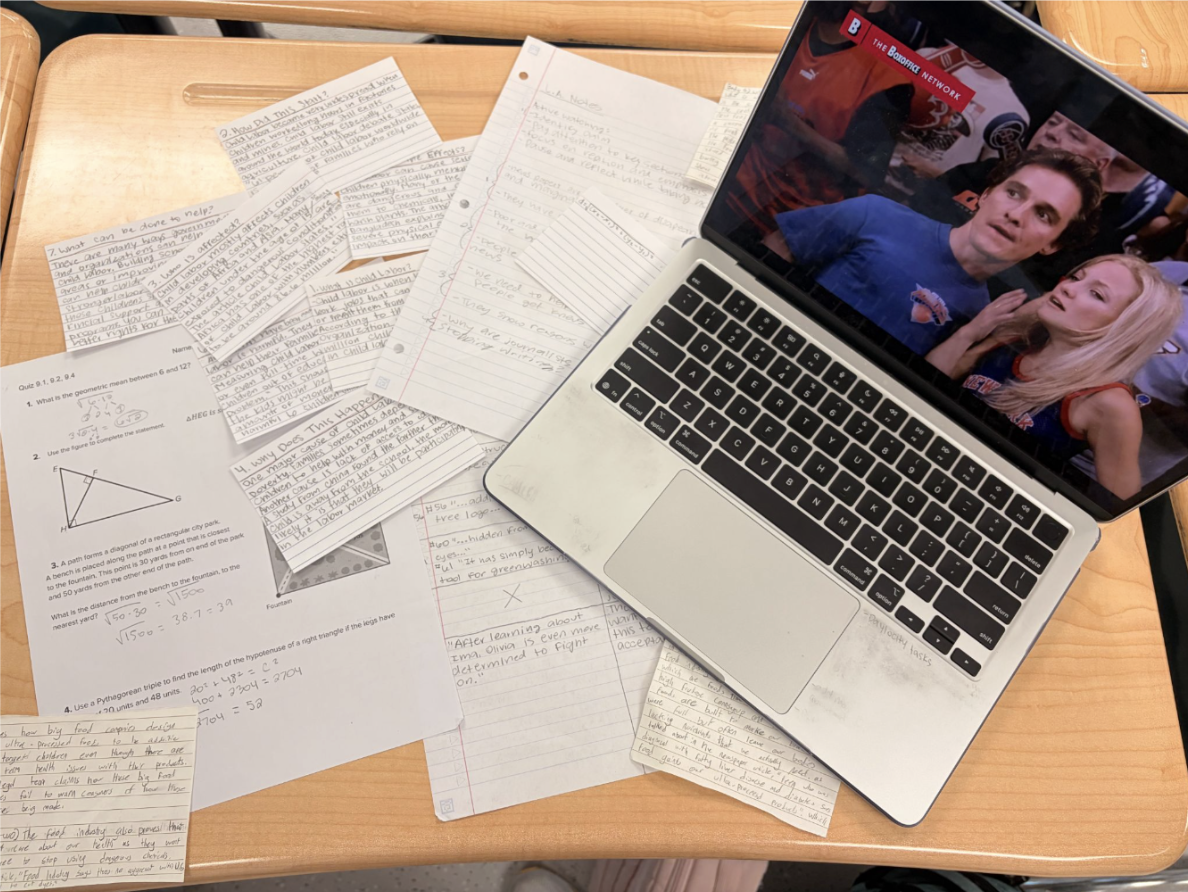
There’s always that one class or one group of students who are always off task. Everyone knows their behavior is annoying, but it also affects teachers on a deeper level than simple annoyance. Teachers don’t always want to deal with immature actions, and sometimes they come off as rude, but in reality, they just want students to get their work done and stay on task so they may become more educated people.
Even though not everyone may be listening or paying attention, teachers still value the ones who do, and they don’t go unnoticed.
“I’m still reaching some students even if I’m not reaching everybody every day,” Etherton said.
A lot of times, there’s a disconnect between students and teachers, as students may view teachers differently or separately from them. One-on-one talks with a teacher can grow a connection and make it a little bit simpler to stay connected with the lesson.
“They forget we’re humans too… I want to help you, we’re all in this together,” Counselor Erica Thomas said.
Students seem to forget that teachers aren’t just teachers. They’re also parents, grandparents, coaches, and so much more. They have their families to go home to, responsibilities outside of school, and their own problems to deal with. But at the end of the day, students and staff alike are all on the same team. They both lean towards the same goal: learning and growth.
“We like kids, there’s a whole reason why we got into this profession, and it certainly wasn’t to not help kids,” Thomas said.
Sometimes teachers can come across as stern or even controlling, but that is usually not the case. If that were the case, they wouldn’t get up and show up every day with a smile on their face. They want you to succeed and are there to help. Teachers do more than just assign assignments and put grades in. They are a support system, supporting students emotionally and encouraging them.
No teacher wants to fail their students; however, sometimes it’s necessary in order to motivate them so they can move on. If a teacher passes someone for simply doing the work, then they aren’t learning anything. Failure is not the end, it allows students to ask themselves what they can do better for next time.
“They think that teachers give grades, but in reality, they earn grades,” Assistant Principal Jennifer Nash said.
Learning isn’t linear. Everyone works at a different pace. Every student has different strengths and weaknesses. Teachers are there to help students, no matter their pace.
“I think for some kids, the expectations could be different than for others because doing their best may look different, because their strengths and weaknesses may look different than another kiddo,” Thomas said.
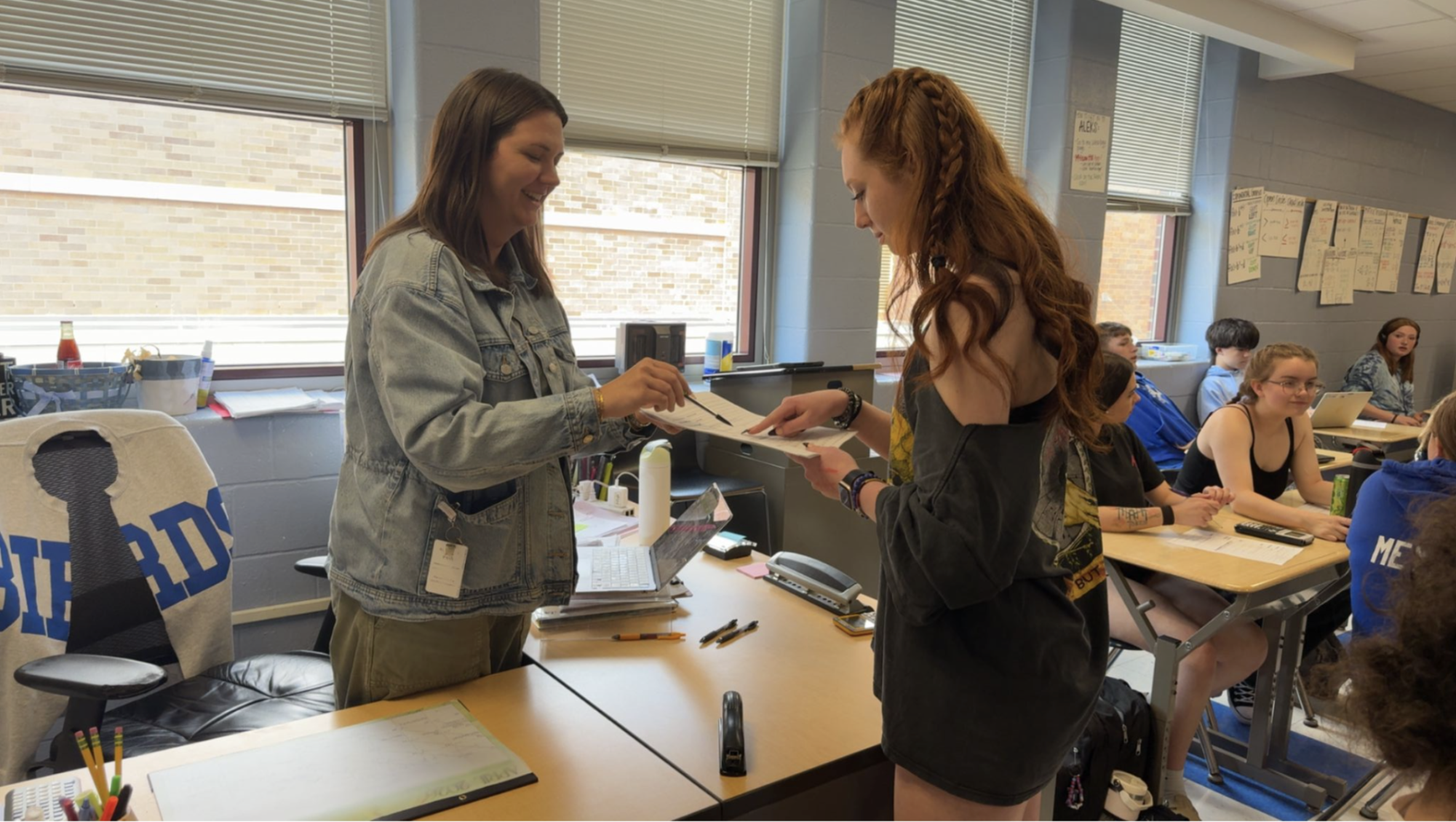
Students often take for granted the extra time and effort teachers put in to make sure they have every chance to be happy with their grade. One of these efforts is dealing with late or make-up work.
“Keeping track of either late work or absent students and what they need to make up is tricky to do,” Algebra teacher Abigail McCoy said.
Many teachers give credit for work that’s turned in past the deadline. While it may not be full credit, it gives students an opportunity to not be stuck with a zero in the gradebook. This practice has become expected to the point where students don’t consider how much work they’re putting into their teachers and how grateful they should be.
Teachers are in this profession to help students learn and to motivate them to do their best. They like kids and find it fun to answer questions and work with them. Ultimately, when students recognize that teachers are working with them, not against them, the classroom becomes a place where both sides can actually succeed together.
“If people can keep in mind that the reason why we’re are here is to learn new things and to do hard things, then I think it would be an entirely different situation,” Nash said.