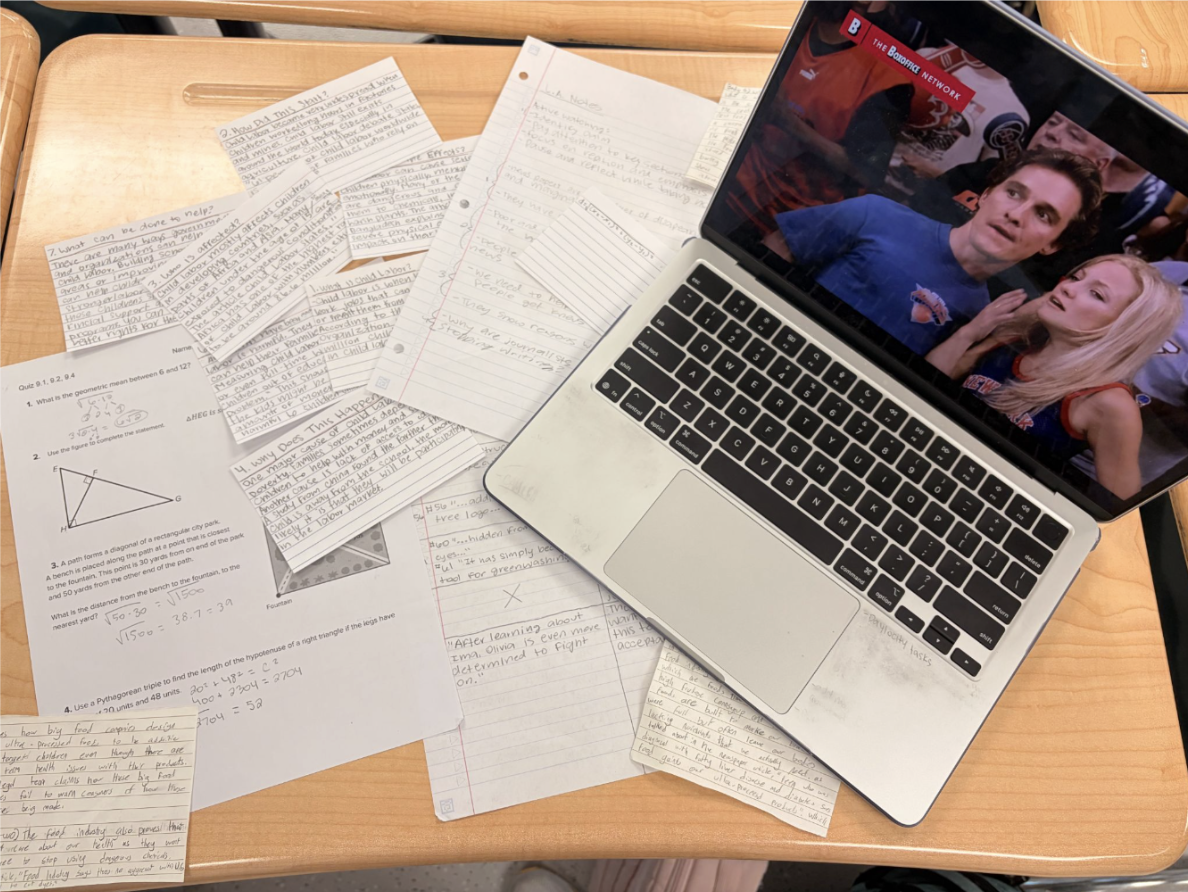
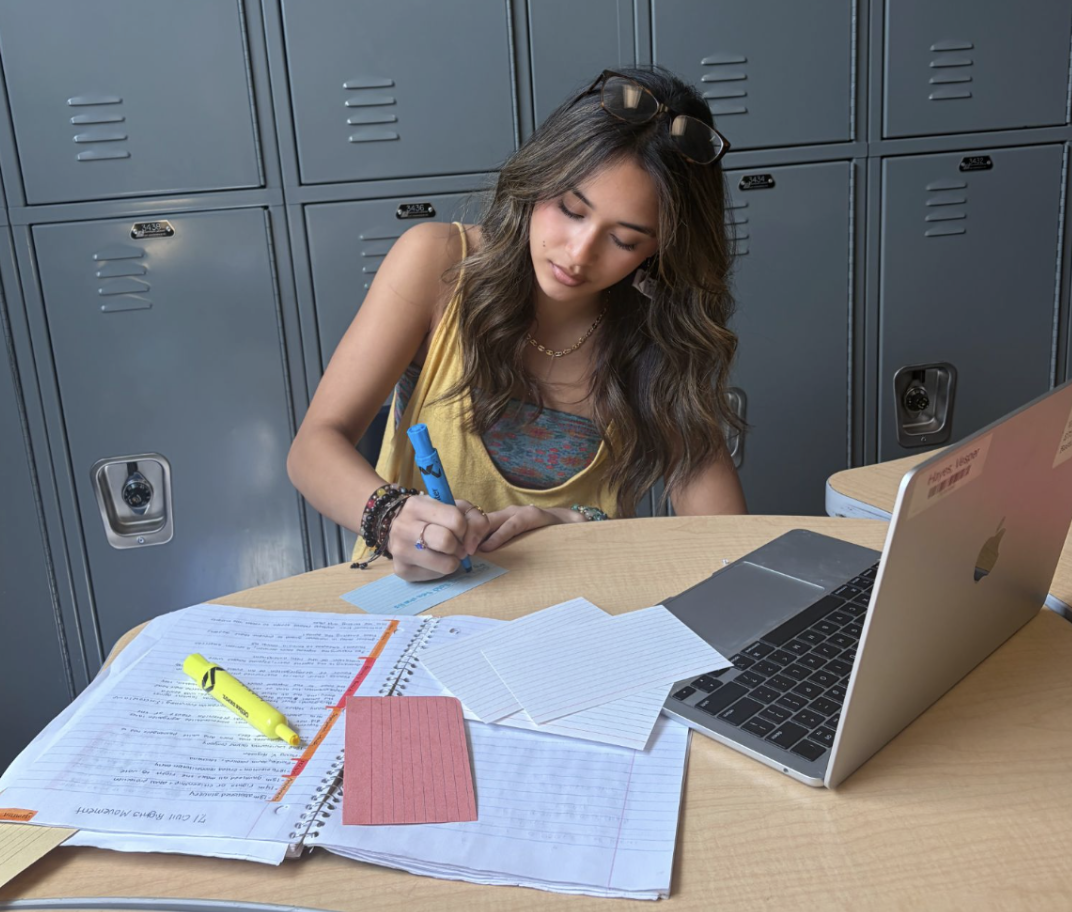
Final exams are the last added grade before school is out and summer finally arrives. Although the end of the year seems to be easy, easy enough where some may consider not putting in their full effort, that is the exact opposite of what is needed.
Finals are the key to passing, though some may have a hard time trying to figure out how to study for these exams. Thankfully, there are teachers around that are more than willing to give you the best advice for how to study for these exams.
“I usually tell students to start by looking back at the major units and themes from the year. History and Government classes are really about understanding connections, patterns and cause-and-effect,” Mike Caldwell, history teacher, said.
According to Caldwell, looking over major units from the year is best, rather than stressing over small details that may not assist students in their final exam. It is easy to find notes and past assignments that correspond with those major units that could provide assistance towards finals.
“Looking through old notes, quizzes, assignments and class activities can help students figure out what topics came up the most. Making a simple timeline, review sheet, or list of key ideas can also help organize everything and make studying feel less overwhelming,” Caldwell said.
This is the information needed to study for any test. In truth, students creating their own notes can do more justice than just skimming over old notes or assignments, but this also correlates with Caldwell’s advice. Taking the advice provided by the ones who create the final may be the key to passing.
“I think the biggest mistake students make with study guides is just copying answers down without really thinking about them. A study guide works best when students actually interact with the information. Rewriting answers in their own words, talking through concepts out loud, or having someone quiz them can make a huge difference,” Caldwell said.
A study guide is a handout, normally with the work that is or is similar to the work that will be on a test. Using this material, rather than copying down answers, will do so much good when it comes to studying. These teachers are practically handing students practice tests, so it is smart to take advantage of these handy tools.
“When completing a study guide, review the key resources your teacher gave you throughout the year. English content is circular. You most likely repeated similar skills throughout the school year,” English Teacher Laura Taylor said.
The content is repetitive, but this is a good thing. The study guide is built upon the material from the test, so reviewing the material to find the answers needed to complete the guide is a huge help. Taylor explained that the English content is circular, so that guarantees students will likely find the answer they are looking for when it comes down to English, but this could also be the same for other classes as well.
“My biggest advice is to avoid waiting until the last minute to study. Finals feel a lot more manageable when students review a little at a time instead of trying to do everything at once. Ask questions, use review opportunities in class, and don’t be afraid to reach out to teachers for help before the test,.” Caldwell said.
Students need to use their time wisely, ask questions, and manage their material as well. Asking questions or managing time may not seem to be helpful, but when it comes down to the actual final, this will be more than helpful.
“The night before your final, you should spend a shorter amount of time studying compared to days earlier. Use the night before to get rest. Get a good night’s sleep,.” Taylor said.
Stated perfectly, a good night’s rest is key. Though said by Taylor, this is agreed by many. Students have all heard a teacher say, “get a good night’s rest,” the day before a test. Sleep has been proven to improve a students test results, so getting good sleep is very important.
“The night before, you should review the study material then get a good night’s rest. The morning of, eat your breakfast, dress comfortably and don’t forget to take a bathroom break before you start your exam,” English teacher Shannon Henson said.
Like Taylor, Henson also points out the importance of a good night’snights rest, also while adding the importance of a good breakfast. The exam days come with long hours spent sitting, so dressing comfortably, as suggested by Henson, could definitely improve one’s mood and comfortability throughout the day.
“The morning of the final, you may do a last-minute study, but more importantly, focus on your inner confidence. Trust you know the material. Eat well the morning of your exams. Eat food that is sustaining. Speak to yourself positively about your final outcome for the year,” Taylor stated.
Doubt, fear and overthinking have never helped students’ performance, but positivity definitely has. Agreeing with Henson’s statement, Taylor also points out the importance of that morning meal, which may be the key to a great morning start.
“My advice would be to trust yourself and your teachers. You are well-prepared. There will not be anything on the final exam that you haven’t been explicitly taught this year and that you haven’t practiced. You will do well!” Henson said.
This goes to show that taking the advice provided by the ones who teach you is key. The exams will not be easy, but taking the advice and believing in yourself will definitely help. If students are lost or confused, there are questions to ask the teachers and that advice will always clear the confusion up.