Following Kentucky’s new policy updating the age to get a learner’s permit, sophomores, along with juniors, are starting to drive. Teens are getting more freedom and opportunities, along with problems and complications that come with driving. With more young drivers on the road, experienced drivers may have concerns about teenagers, now as young as 15, driving due to their limited experience and potential confusion. However, students believe there are benefits to the new law.
The social life of a driving teen can improve with the freedom to go out whenever and wherever. Hanging out with friends and going to events becomes easier and more frequent since they don’t have to worry about asking for a ride.
“I definitely have more opportunities to drive. I only have my permit, so I need my parents, but I get a lot of practice in. And they let me drive to hang out with people, they just take the car back,” Kit Valentine (10) said.
Asking for rides is no longer a problem when students can drive by themselves.
“It’s just easier, more convenient since I don’t need to ask for a ride anymore, it’s a little scary sometimes to drive alone, but also pretty fun,” Elliot Martin (11) said.
Since teenagers lack experience driving, it’s easier for them to make mistakes. According to the CDC, the age group of 16-19 gets into more car crashes than any other age group, and with the snow on the ground and ice on the roads, getting into a car crash is more common in this season than any other.
Walker Hunt experienced the winter-time collisions due to the snow in a collision with another car. “I mean, it was my fault, but I learned to be more attentive and careful while driving,” Walker Hunt (11) said.
Some new drivers have experienced different kinds of issues that result from having a “student driver” sticker on their car. Recently, the cars with stickers have been targeted in different ways. This includes getting cut off, people swerving around them, or riding close behind the student driver.
“When I had the sticker on my car, people cut me off way more often than when I had it off. And sometimes people would brake hard in front of me, so I’d need to slam on my brakes behind them,” Sarah Henson (11) said.
Experienced drivers need to be more careful in areas where student drivers are common. Since student drivers may not be familiar with all the rules and methods of driving, mistakes are far more common.
“My daughter just got her full license, and it is terrifying, but nice. I don’t need to drive her everywhere. I don’t think teens are the best drivers, and I do get worried,” English teacher Katherine Simon said
With the lowered age required to get a learner’s permit, teenagers get more freedom, but also take on more responsibility. With the complications that come with driving, teens are learning patience and patience on the road. Both experienced and new drivers face issues on the road, but learning from mistakes assists all drivers.
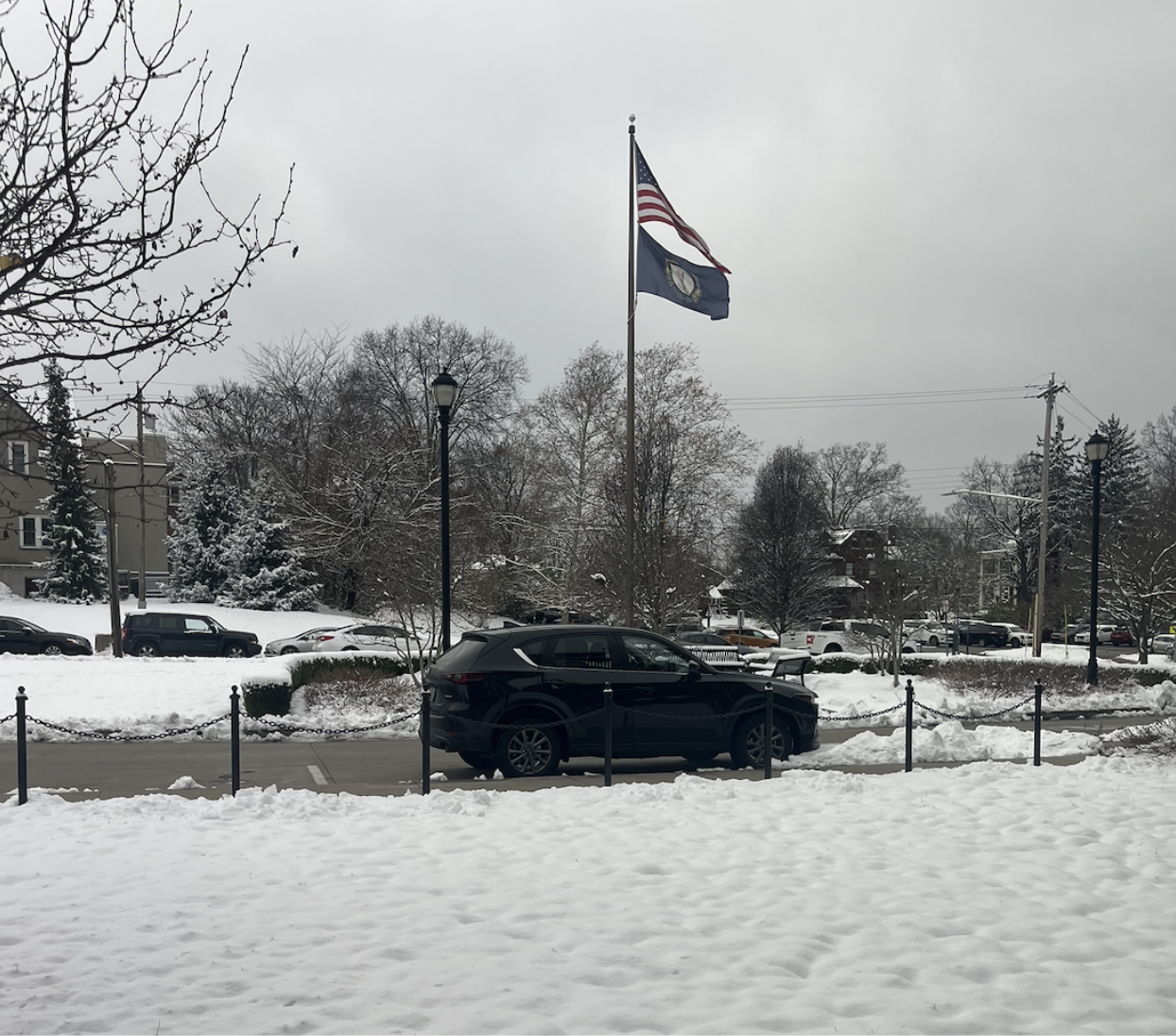
As winter is settling in with the latest snowfall, new drivers are getting their first taste in driving during the snowy, icy conditions. This is one of the biggest steps forward in teen driving for all. Driving on the road during the snow gives new drivers another challenge.
One challenge for new drivers is understanding how different driving on the roads can be in the winter. Snow reduces drivers’ visibility and makes it harder to judge their distance. Ice can also catch new drivers off guard, leading to sudden skidding or losing control. Teens who usually feel comfortable behind the wheel just weeks earlier are now finding themselves in the center of a whole new challenge.
Prepping the vehicle for the snow is another new responsibility for new drivers. Scraping ice from the windshield and warming up the car before school are new habits that can add several minutes to one’s morning routine. Driver’s ED classes often cover winter driving, but no class can ever prepare students for how to respond to slippery roads; those are just skills learnt over time.
Despite many difficulties in teen driving in the winter, the experience builds responsibility and offers new learning opportunities. By facing these challenges, teen drivers gain experience that will benefit them long after winter ends. As the snow continues to fall this season, teens need to stay alert and slow down on the roads. With the right mindset, teen drivers can drive on winter roads safely.