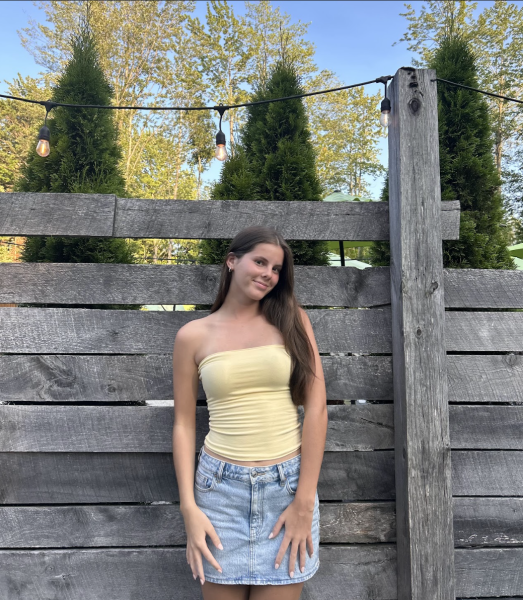

On Thursday, Feb. 26, we had the incredible opportunity to attend Capitol Day in Frankfort, Kentucky. FCS teacher Kerry Conley invited us, along with Whitney Strong, an organization co-founded by gun violence survivor Whitney Austin, because of our previous reporting on gun violence and the CARR bill. She wanted us to see how students could actively participate in advocacy and the legislative process.
During the event, we met with multiple organizations, including Whitney Strong and Sandy Hook Promise, as well as lawmakers, to discuss current issues. We spoke with Representative Matt Lehman, who covers district 67, and Senator Shelley Funke Fromeyer, who covers district 24.
One of the main issues we advocated for was the Glock switch ban. A Glock switch is a device that converts semi-automatic handguns into fully automatic machine guns. They are already banned under federal law, but Kentucky doesn’t have its own law against them. That means anyone caught with one in Kentucky can only be charged under federal law.
Some lawmakers are cautious about passing these bans because of concerns about protecting the Second Amendment. At the same time, society regulates many other areas to protect people. The debate over gun laws shows the ongoing challenge of finding a balance between individual freedoms and public safety.
Conley provided lawmakers with a copy of a Tennessee school lockdown bill, which ensures all schools have a plan to keep students in place in case an active shooter were to pull the fire alarm. She pushed them to consider these measures for school safety.
“Why can’t we do something bare minimum to keep everyone safe?” Conley said.
Matt Lehman suggested that he would consider this bill, most likely bringing it up next session.
We also had the chance to sit in on an open session organized by Whitney Strong, where we heard from lawmakers like Senator David Givens and Representative Jason Nemes.
“We don’t need more laws; we need to enforce the laws we already have,” sponsor of the Glock switch ban bill Nemes said.
The timing of our visit was especially exciting and important, as the Glock switch ban was scheduled for a House vote during the week of March 2. Matt Lehman predicted it would barely pass, and on March 3, it did. Experiencing this sequence of events firsthand highlighted how journalism and advocacy influence the political process.
“I think it’s a special opportunity when student journalists get to see what they’ve done actually come alive,” publications teacher Beth Brubaker said.
Capital Day taught us so much about the legislative process, advocacy, and the importance of showing up and using our voices. It also opened new opportunities for us to explore potential career paths in journalism or law. It was a transformative experience that showed us the real-world impact students can have on issues that matter.